
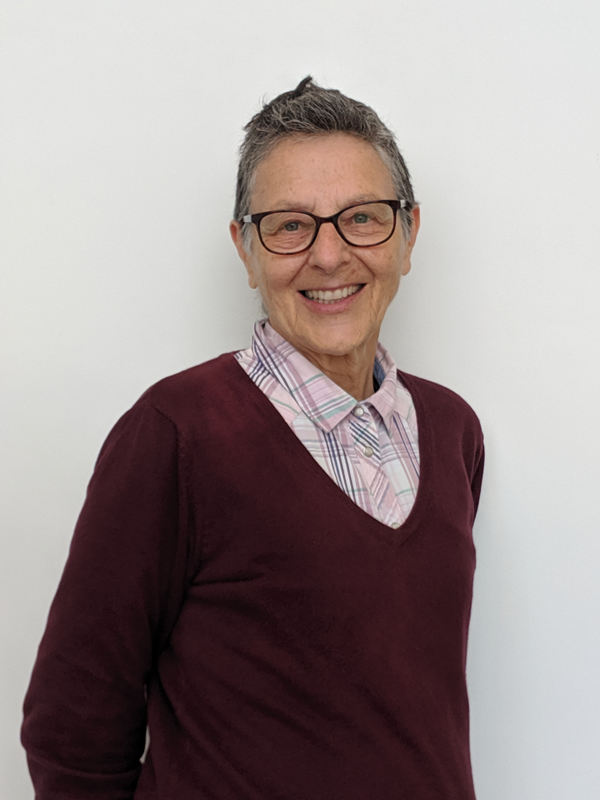
Dr. Ruth Beer
Emily Carr University
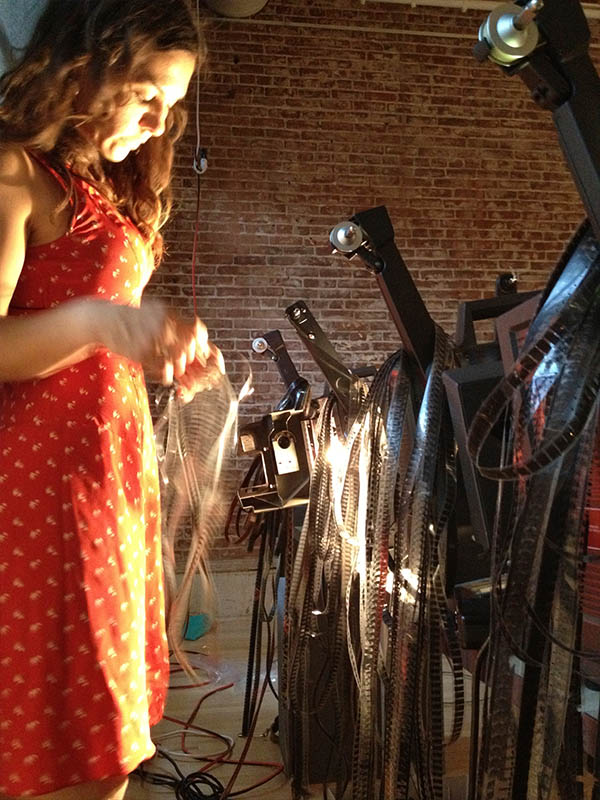
Lindsay McIntyre
Emily Carr University
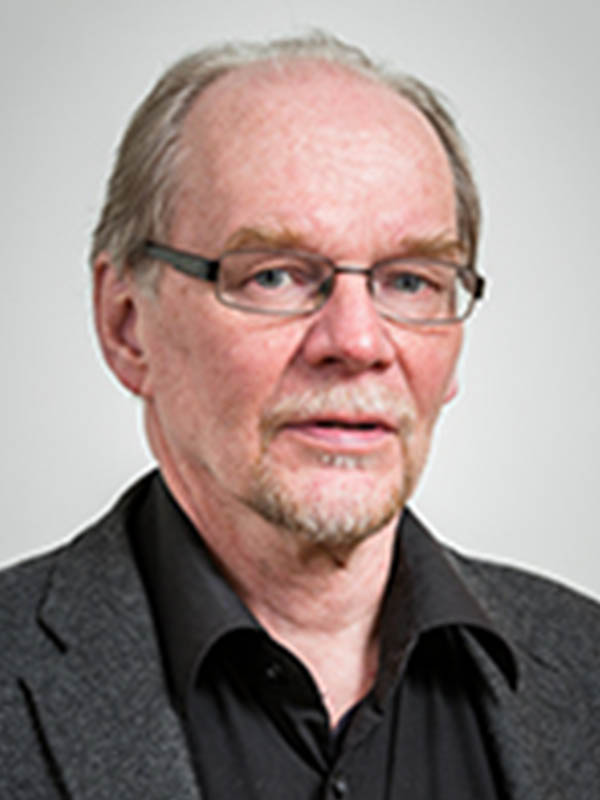
Dr. Timo Jokela
University of Lapland
Principal Investigator: Dr. Ruth Beer (ECUAD)
As PI, Beer is responsible for the project as a whole, including all financial decisions, RA training, convening facilitation, research data management, and the coordination of research-creation production and the exhibition series.
Proportion of research time: 65%
Overview: Beer (she/her) is an artist, scholar and curator who works in photography, interactive digital media, and tapestry, exploring themes of resource extraction, energy transition, and northern rural development. Her research-creation initiatives often incorporate landscape and site-determined practices, and her interests in the materialities of digital infrastructure extend from an extensive sculptural and mixed-media practice (e.g. large woven copper tapestry) which frequently deconstructs the history of the materials used. Beer has exhibited her artwork in national and international galleries and museums, and has published in leading journals and magazines including and Imaginations and the Journal of Cross Cultural Image Studies, co-authored with Walker-Borsa. Beer has a proven track record of leading interdisciplinary research-creation projects, such as Shifting Ground (PI; SSHRC 2019–2025), Trading Routes (PI; SSHRC 2013–17), Feminist Energy Futures (Co-I; SSHRC 2017–24), and Hidden Cost of Supply Chains (Co-I; SSHRC 2019–2025).
Co-I #1: Lindsay McIntyre (ECUAD)
Co-I McIntyre will co-facilitate the Inuvik convening, co-design the workshops, and coordinate and contribute to the exhibitions.
Proportion of research time: 50%.
Overview: McIntyre (she/her) is an award-winning Inuit/Scottish filmmaker, art educator, and production designer whose films are informed by the co-mingling of customary and contemporary Inuit knowledge. McIntyre’s body of over 40 films includes NIGIQTUQ ᓂᒋᖅᑐᖅ _The South Wind (2023), which has earned submission to the 2025 Academy Awards. In the context of this project, McIntyre’s artistic commitment to ‘making things more difficult’ through DIY, alternative, and analog technologies will contribute to the design of innovative place-based workshops, while her expertise in community-based research and the negotiation of Indigenous co-production in northern contexts will help guide the project from start to finish. McIntyre was Co-I on Beer’s previous SSHRC-funded project Shifting Ground (2019–2024).
Co-I #2: Dr. Mél Hogan (Queen’s)
Roles: Hogan will co-facilitate the St. John’s convening, will oversee publications and podcasts, and support RA training.
Proportion of research time: 40%
Overview: Hogan (she/her) is a scholar of data infrastructures, data extractivism, and the environmental humanities, with an emphasis on research-creation practices and qualitative methods. Hogan’s work has appeared in leading journals such as New Media & Society, Labour & Globalisation, and First Monday. Hogan is Director of the Environmental Media Lab, and supervisor of the online publication Heliotrope. Hogan is also the host of The Data Fix podcast and has appeared on many other podcasts such as The Data Center Industrial Complex.
Co-I #3: Dr. Darin Barney (McGill)
Roles: Barney will co-create the data collection framework, co-facilitate St. John’s convening, lead on the edited volume, and support RA training.
Proportion of research time: 35%.
Overview: Barney (he/him) is a highly-cited communications scholar whose work emphasises materialist approaches to media and communication infrastructures, energy, and the environment. His books include The Network Society (2004), Community in the Digital Age: Philosophy and Practice (2004), and Solarity (with Imre Szeman, 2021). Barney’s contributions to co-authored publications will build on his previous SSHRC-funded All Roads Lead to Churchill (2023), through which he has begun to develop an account of infrastructural mediation in the sub-Research Team, Previous Outputs and Student Training 2 Arctic town of Churchill, MB. Beer and Barney have previously collaborated through the Petrocultures Research Group and After Oil collective.
Collaborator #1: Dr. Tomas Walker-Borsa (London, UK/Haida Gwaii)
Roles: Walker-Borsa will co-create the data collection framework, facilitate the Skidegate convening, document the convenings, and co-author publications and convening reports.
Overview: Walker-Borsa (he/him) is an independent film producer, writer, and lecturer with a focus on the cultural politics of internet infrastructures, particularly fibre. Walker-Borsa’s publications and photo essays have appeared in outlets such as Vice, The Globe and Mail, Canadian Journal of Communication, and Imaginations (with Beer, 2022). Walker-Borsa is an adopted member of the Naa ‘Yuuwans Xaaydaga clan of the Haida Nation, and previously served as Internet Connectivity and Accessibility Coordinator for the Council of the Haida Nation. Walker-Borsa was a Collaborator on Beer’s previous Shifting Ground (SSHRC 2019–2024) and an RA on Beer’s Trading Routes (SSHRC 2013–17) projects.
Collaborator #2: Dr. Timo Jokela (University of Lapland)
Roles: Jokela will determine site-specific needs, support documenting the convenings, coordinate and co-curate the exhibition series, and co-author publications. | Overview: Jokela (he/him) is an artist, curator, art educator whose site-specific practice of ‘northern visual ethnography’ probes the relationships between Arctic cultures, arts, and nature, often drawing on his mixed Saami/Finnish heritage. Jokela’s recent research outputs include the series Relate North (Intellect Press, 2017–24), which examines art education and artistic research in the circumpolar North. Beer and Jokela have collaborated extensively through the Arctic Sustainable Arts and Design Network (ASAD), which Jokela directs; Jokela was a Collaborator on Beer’s Shifting Ground (SSHRC 2019–2024) project and has curated numerous Relate North exhibitions (e.g. Karashok Norway) in which Beer’s work has appeared**.**
Collaborator #3: Dr. Matt Parker (University of Pennsylvania)
Roles: Parker will lead on the design of workshops, co-author publications and convening reports, and contribute to the exhibition series. | Overview: A sound artist, filmmaker, and qualitative researcher interested in infrastructures and field recording techniques, Parker (he/him) is the Gilbert Seldes Multimodal Postdoctoral Fellow at the University of Pennsylvania. Parker’s interactive ‘sonospheric investigations’ of data architectures have been exhibited widely internationally, while his scholarship has appeared in leading journals such as Culture Machine. Parker’s expertise in sonic methods and interactive media will contribute substantially both to the design of workshops and the culminating exhibition series. Parker and Hogan have collaborated on numerous previous occasions (e.g. data centre research in Sweden, and on Hogan’s The Data Fix podcast).
Collaborator #4: Dr. Zane Cooper (St. Lawrence University) | Roles: Cooper will coordinate and co-design the workshops, support documentation, determine site-specific needs, and contribute to the exhibition series. | Overview: Cooper (he/him) is a qualitative researcher of internet infrastructure and sustainability focused on the Arctic. An Assistant Professor of Digital Media and Film at St. Lawrence University in New York, Cooper maintains strong research relationships with communities of Iceland and Greenland, where he explores both the opportunities and ‘pain points’ of digital infrastructure in relation to evolving climate policy. Cooper will contribute his extensive experience of participatory methods and understanding of the politics of infrastructural development in Arctic environments. Hogan and Cooper have collaborated on numerous occasions, most recently on The Making of Critical Data Centre Studies.
Collaborator #5: Boxi Wu (Oxford Internet Institute, University of Oxford) | Roles: Wu will lead the literature review and co-author publications and convening reports. | Overview: Wu (they/them) is a first-year doctoral student at the Oxford Internet Institute, where their research explores the environmental impacts of hyperscale cloud computing through an ethnographic study of Europe’s largest (proposed) data centre campus. Wu was previously the Responsible AI Manager for Google DeepMind and will bring extensive experience in the development of digital ethics and policy standards. Wu has previously collaborated with both Andrews and Walker-Borsa through the Oxford Digital Ethnography Group. Research Team, Previous Outputs and Student Training 3
Collaborator #6: Hannah Andrews (British Council) | Roles: Andrews will coordinate and co-curate the exhibition series, leading on international venues, and will co-author publications and convening reports. | Overview: Andrews (she/her) is a curator, arts scholar, and Director of Digital Innovation in the Arts at the British Council. She has led collaborations between organisations such as Google Research, the Barbican, Tate Liverpool, Serpentine Galleries, and Guggenheim Bilbao. Andrews has also published widely, most recently co-authoring the European Journal of Cultural Management and Policy article “Articulating arts-led AI: Artists and technological development in cultural policy” (2024). Andrews’ expertise in digital innovation in the arts will allow her to play a leading role in the curation of the concluding exhibition series, while building on her own research concerning the sociocultural impacts of geospatial technologies in the Faroe Islands, initially developed as part of her award-winning postgraduate research at the Oxford Internet Institute.
Collaborator #7: Jisgang Nika Collison (Haida Gwaii Museum) | Roles: Collison will co-facilitate the Skidegate convening, support documentation, determine site-specific needs in Skidegate, and coordinate and co-curate the Haida Gwaii exhibition. | Overview: Collison (she/her) is an artist, curator, and Executive Director of the Haida Gwaii Museum. Collison belongs to the Ḵaay’ahl Laanas of the Haida Nation and has worked in the field of Haida language, arts, and culture for over two decades. Collison is co-chair of the Haida Repatriation Committee and sits on the Directors Advisory Council of the UBC Museum of Anthropology. Collison and Walker-Borsa previously collaborated on the award-winning iPads for Elders digital literacy project, and outputs of Beer’s Catch and Release (SSHRC 2009–2013) exhibited at the Haida Gwaii Museum.
Artist: Jeneen Frei Njootli (Old Crow, Yukon) | Roles: Frei Njootli will co-facilitate the Inuvik convening, collaborate with NWT artists, and contribute to the exhibition series. | Overview: Frei Njootli (they/them) is an interdisciplinary Vuntut Gwich’in artist invested in Indigenous sovereignty and decolonization. Known primarily for their work with performance, sound, textiles, workshops, and ‘feral scholarship’ combining traditional processes and organic materials, Frei Njootli was previously Assistant Professor of Art at UBC and was a finalist of the 2018 Sobey Art Award. While Frei Njootli has confirmed their enthusiastic intent to collaborate and will be integral to the work undertaken, they have not been listed as a ‘Collaborator,’ as this would preclude them from receiving payment for their important contributions. Accordingly, they will be compensated as an independent artist per CARFAC guidelines. Frei Njootli was a Collaborator on Beer’s Shifting Ground (SSHRC 2019–2024) and participated in that project’s concluding exhibition Shifting Ground – Muuttuva maa, co-curated by Beer at the Rovaniemi Art Gallery, Finland, in February 2024.
- Description of Selected Previous and Ongoing Research Results
Methodologically, this project builds on a number of Beer’s previous SSHRC-funded projects which have successfully used methods of research-creation and place-based inquiry to spur “thinking–making–doing” (Springgay and Truman, 2018) in situ. Thematically, it also extends ongoing collaborations relating to the specificities of rurally located digital infrastructures and spatial, material and aesthetic considerations of rural landscapes in transition. Among the most relevant of these previous and ongoing research projects are:
1) Shifting Ground: Mapping Energy, Community, and Geography in the North (Insight Grant, 2019-2024; PI Beer, Co-I McIntyre, Collaborators Walker-Borsa, Jokela, Frei Njootli). Shifting Ground was a research-creation project exploring resource extraction, climate imaginaries, and Research Team, Previous Outputs and Student Training
environmental adaption in the Arctic, relevant to this project through the continued focus on local resiliencies with global concerns through the lens of contemporary art.
2) Trading Routes: Grease Trails, Oil Pipelines (Insight Grant, 2013–17; PI Beer, RA Walker-Borsa). Trading Routes interrogated the intersections of historic oolichan oil trade routes and the proposed Northern Gateway pipeline and deployed participatory leanings and examining of northern infrastructural/cultural histories that will be taken up in our proposed project.
3) On Energy Humanities: Contributions from Humanities, Social Sciences and the Arts to Understanding Energy Transition and Energy Impasse (Insight Grant, 2015–16; Co-I Beer). This project emphasised visual modes of knowledge synthesis and advocated for an expanded role for artistic intervention in contemporary environmental debates.
4) Catch and Release: Mapping Stories of Cultural and Geographic Transition (Insight Grant, 2009–2013; PI Beer). Catch and Release focused on issues related to sustainability and resilience in the face of infrastructural/economic transition in Pacific coastal communities, and involved a substantial community engagement component.
5) Media Rurality (Connection Grant, 2021–2023; PI Barney). Media Rurality responds to a persistent bias within media studies by positing that contrary to stereotypes, rural locations are always-already media and infrastructure intensive.